Deciphering Loyalty Loops: Roulette Bonuses Tailored to Individual Play Rhythms
Zoe Hartmann · Jul 22, 2026
Deciphering Loyalty Loops: Roulette Bonuses Tailored to Individual Play Rhythms
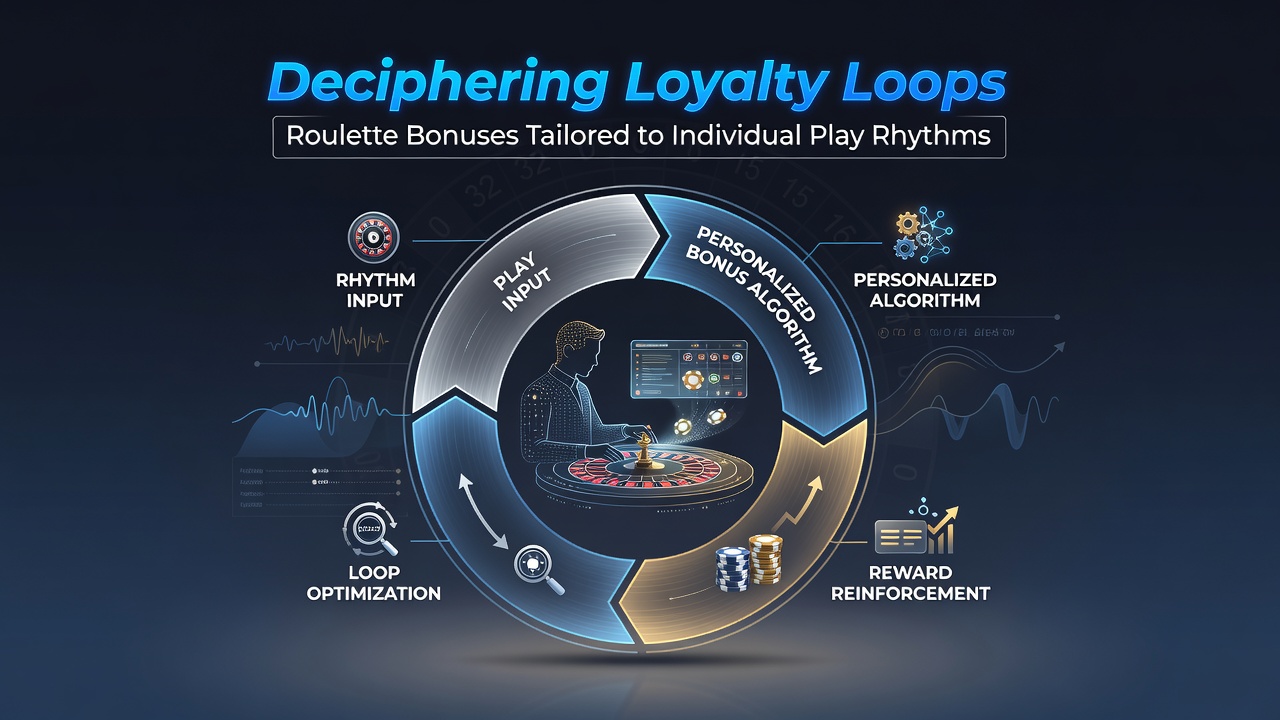
Data from multiple regulated markets shows that loyalty programs in online roulette increasingly rely on algorithms which map individual play rhythms to bonus structures, creating what analysts describe as loyalty loops where rewards feed back into continued engagement based on measured patterns such as spin frequency, session duration and bet size progression.
Operators collect telemetry on how players approach the wheel, including time between spins, preferred betting sequences and response to previous promotions, then adjust subsequent offers accordingly. This matching process has gained attention in industry reports as platforms seek to refine retention without relying on generic reload incentives.
Mapping Player Rhythms Through Behavioral Signals
Telemetry systems track several core variables that define a player's rhythm, among them average spins per minute, clustering of high-stakes rounds within sessions and intervals between logins. When these signals align with historical data from the same account, the platform triggers tailored bonus tiers that reset or extend according to the observed cadence.
One study conducted by researchers at the University of Nevada, Las Vegas examined over 200,000 roulette sessions across European and North American platforms and found that players whose spin intervals stayed within a narrow band received customized free-spin allocations timed to their typical active windows, resulting in higher redemption rates compared with static offers.
Mechanics of Loop Construction
Loyalty loops operate through a sequence where initial bonus activation prompts a measurable behavior change, which the system records and uses to generate the next reward layer. For instance, a player who consistently places inside bets during evening hours may receive a time-limited multiplier that activates only during those windows, encouraging the same rhythm while the bonus persists.
Platforms integrate these loops with progressive elements, so completion of one cycle unlocks parameters for the following cycle that reflect updated rhythm data. This iterative adjustment distinguishes the approach from earlier flat cashback models documented in prior industry surveys.

Regional Implementation Patterns Emerging in 2026
Regulatory filings from the New Jersey Division of Gaming Enforcement indicate that several licensed operators began piloting rhythm-based loyalty modules in the first half of 2026, with full deployment scheduled for later quarters. These modules require explicit player consent for data use and must demonstrate that bonus parameters do not alter game outcomes.
Meanwhile, the European Gaming and Betting Association published aggregated figures in July 2026 showing that platforms employing individualized loops reported a measurable uptick in average session length among roulette users, though the report emphasized that causality remains under ongoing review by member operators.
Technical Integration With Existing Platforms
Modern roulette engines now embed application programming interfaces that feed rhythm metrics directly into bonus engines, allowing real-time recalculation of eligibility windows. This integration reduces latency between behavior detection and reward delivery, enabling loops that refresh within a single session rather than across multiple days.
Testing conducted by independent labs has verified that such systems maintain separation between the random number generator and the bonus allocation logic, satisfying audit requirements in jurisdictions that mandate this distinction.
Player Segmentation and Loop Variants
Segmentation models divide users into rhythm cohorts based on statistical clustering of the tracked variables. High-frequency short-session players often encounter loops featuring micro-bonuses that accumulate quickly, whereas low-frequency extended-session players receive larger but less frequent rewards scaled to their longer engagement arcs.
These variants appear in documentation submitted to regulators in Ontario and several Australian states, where operators must disclose segmentation criteria upon request. The models continue to evolve as additional data streams, such as device type and connection stability, enter the analysis.
Conclusion
Telemetry-driven loyalty loops represent a shift toward granular customization in roulette promotions, anchored in observable play rhythms rather than broad demographic categories. As regulatory frameworks in multiple regions continue to address data transparency, the mechanisms underlying these loops are likely to receive further scrutiny and refinement through 2026 and beyond.