How Roulette Variant Preferences Shape Bonus Redemption Timelines Across Digital Platforms
Zoe Hartmann · Jun 24, 2026
How Roulette Variant Preferences Shape Bonus Redemption Timelines Across Digital Platforms
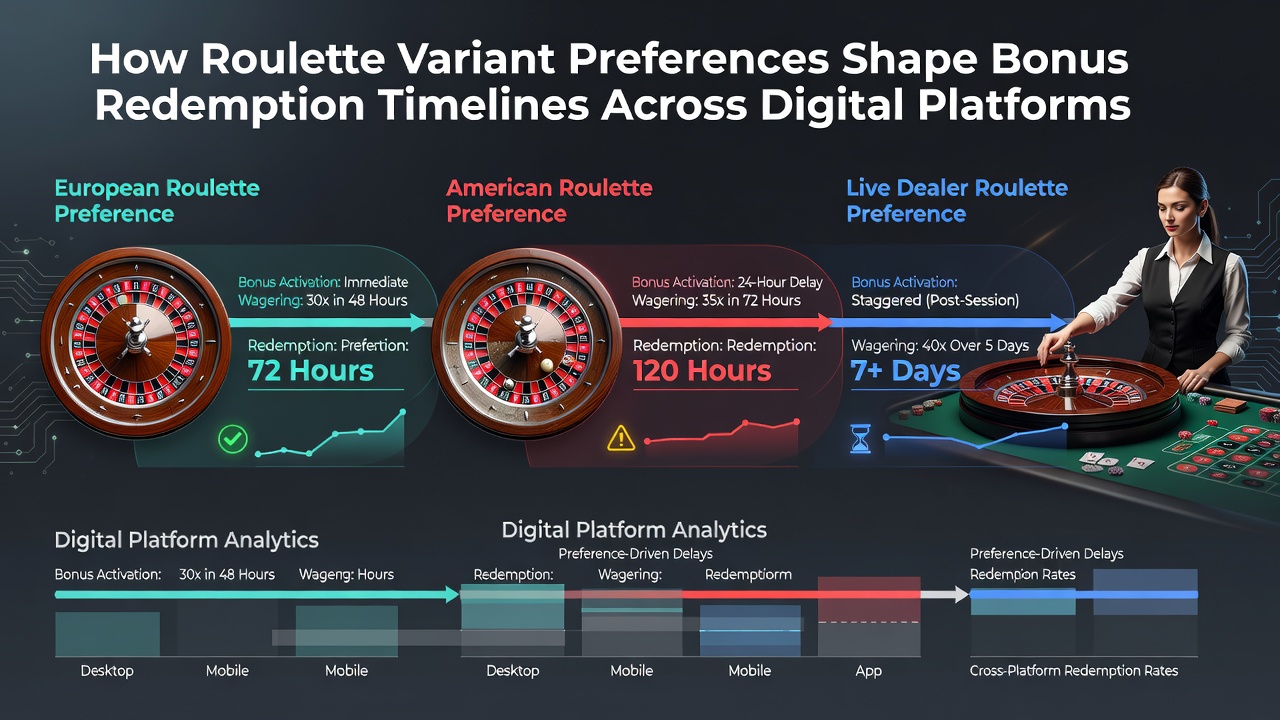
Digital platforms track player interactions with roulette variants such as European, American, and French versions, and these preferences correlate with measurable differences in bonus redemption timelines according to aggregated transaction data from multiple operators. European roulette, which features a single zero and a house edge of 2.7 percent, attracts players who often complete wagering requirements faster than those favoring American roulette with its double zero and 5.26 percent house edge, while French roulette adds rules like la partage that further adjust effective player returns and influence how quickly bonus funds convert to withdrawable cash.
Variant Characteristics and Player Selection Patterns
Players select variants based on rule sets and payout structures, and data from platform analytics indicate that those opting for European or French versions initiate bonus redemptions within shorter windows compared to American roulette enthusiasts. European roulette draws consistent engagement from users who prioritize lower variance sessions, leading to redemption sequences that cluster around the 48 to 72 hour mark after bonus activation, whereas American roulette preferences align with extended timelines stretching beyond 96 hours as players navigate higher risk parameters before meeting playthrough thresholds. French roulette, incorporating en prison and la partage mechanisms, shows intermediate patterns where redemption activity peaks between 60 and 84 hours, reflecting the partial return of even money bets that extends session duration without accelerating requirement completion.
Platform Algorithms and Timeline Adjustments
Operators adjust bonus parameters dynamically in response to variant popularity, and reports from the Canadian Gaming Association highlight how platforms in regulated markets modify redemption windows to match observed player cohorts. When European roulette accounts for over 60 percent of wheel game traffic, systems often shorten minimum play periods by 12 to 18 hours to maintain engagement velocity, while spikes in American roulette participation prompt extensions that accommodate slower progression through wagering multipliers. These adjustments appear in backend configurations that monitor real time variant selection, allowing platforms to synchronize bonus expiration dates with the statistical longevity of each player segment.
Regional Data and June 2026 Developments
Markets in Europe and North America display distinct correlations between variant choice and redemption pacing, with European operators noting tighter timelines tied to French roulette preferences due to rule modifications that reduce effective house edges during bonus play. In June 2026, several platforms implemented updated tracking protocols following directives from the Australian Communications and Media Authority that require transparent reporting of how variant selection influences promotional timelines across digital ecosystems. These protocols reveal that players who alternate between variants exhibit hybrid redemption behaviors, completing requirements in blended windows averaging 75 hours, which sits between the faster European cycles and the more deliberate American ones.
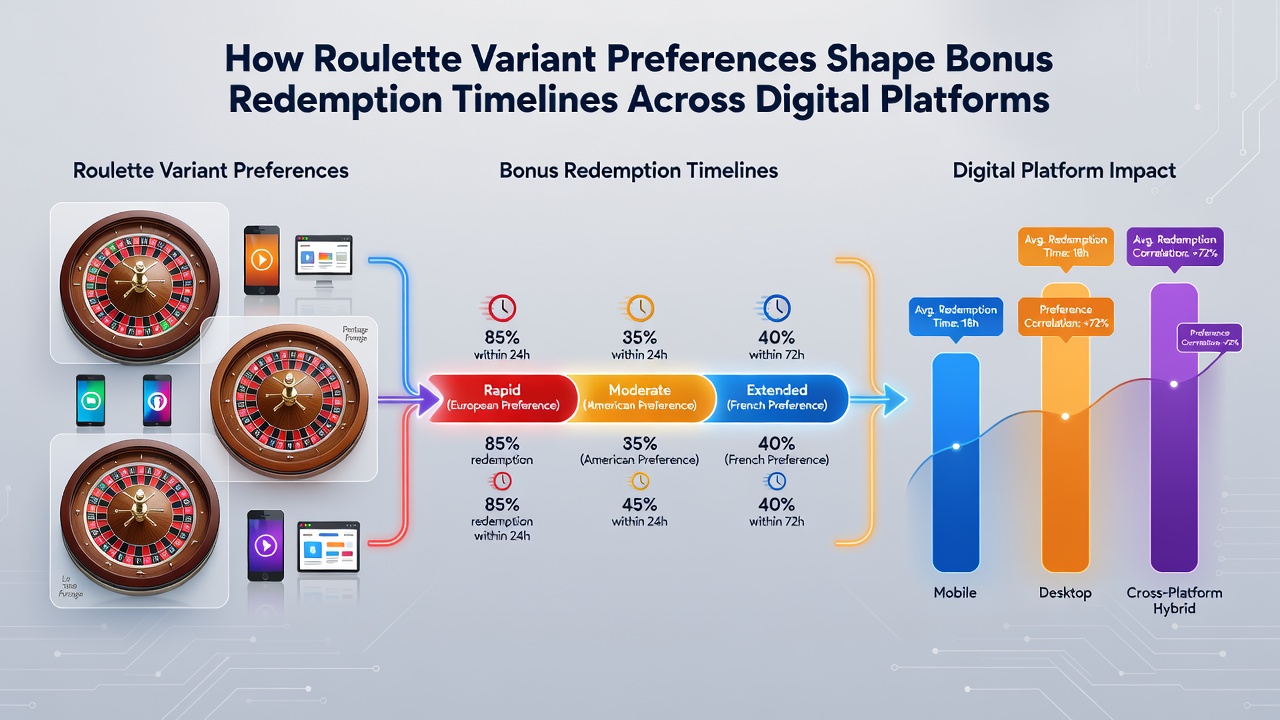
Device level data further refines these observations, as mobile users gravitate toward European variants and complete redemptions on shorter cycles than desktop players who favor American tables with extended session tracking. Platform logs show that progressive jackpot integrations, more common in European and French formats, accelerate redemption activity because players chase larger payouts that satisfy playthrough conditions in fewer spins.
Cross Platform Comparisons and Incentive Structures
Comparative analysis across operators demonstrates that bonus structures incorporating variant specific multipliers produce divergent redemption rates, and research from the European Gaming and Betting Association indicates that platforms offering enhanced returns on French roulette see redemption clusters forming 15 to 20 hours earlier than standard offerings. American roulette bonuses, by contrast, incorporate higher multipliers to offset the elevated house edge, resulting in redemption timelines that extend as players adjust bet sizing to manage bankroll longevity. These structural differences create measurable segmentation where variant loyalists follow predictable paths through the redemption funnel without deviating into alternative game types.
Behavioral Metrics and Future Tracking
Longitudinal studies of player accounts confirm that variant preferences remain stable over multiple bonus cycles, allowing platforms to forecast redemption volumes with increasing accuracy as datasets expand. Metrics collected through loyalty integrations show that French roulette adherents maintain consistent 70 hour average timelines even when offered cross variant incentives, while European roulette users accelerate further when paired with time limited multipliers. Observers tracking these patterns note that such stability supports refined algorithmic matching between player profiles and promotional parameters, reducing variance in redemption completion across digital environments.
Conclusion
Variant preferences directly influence the pace and clustering of bonus redemptions on digital platforms through a combination of rule mechanics, house edge differentials, and platform responsive algorithms. Data from multiple regulatory regions establish clear correlations that operators use to calibrate timelines, ensuring promotional structures align with observed player behaviors across European, American, and French roulette formats. These relationships continue to evolve with new tracking standards introduced in June 2026 and ongoing refinements in regional oversight frameworks.