Linking Cultural Preferences to Sequential Bonus Triggers Across Global Wheel Game Platforms
Hugo Fischer · Aug 7, 2026
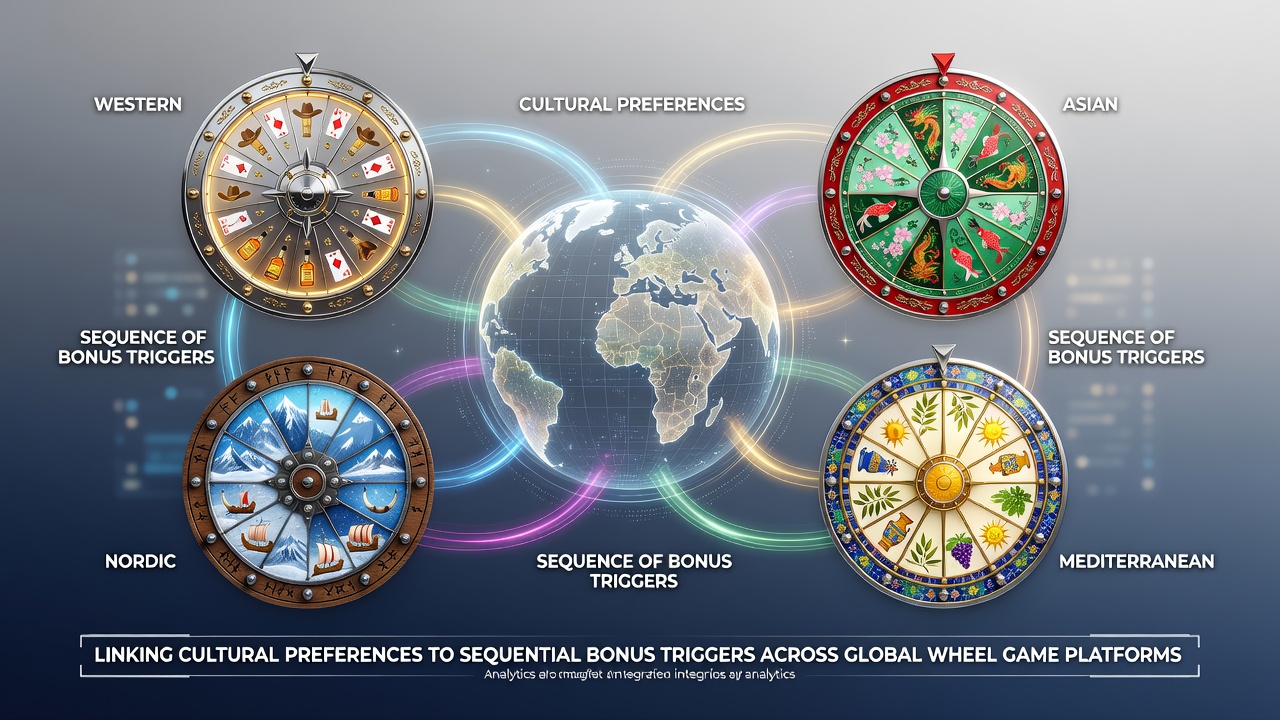
Linking Cultural Preferences to Sequential Bonus Triggers Across Global Wheel Game Platforms
Wheel game platforms have expanded their sequential bonus structures in response to regional play habits that researchers continue to document through player data sets collected between 2024 and 2026. These structures often begin with an initial deposit match, followed by a second trigger after a set number of spins or a third activation once a player reaches a specific volume threshold. Platforms adjust the timing and value of these steps according to patterns observed in different markets.
Regional Patterns in Bonus Sequencing
Platforms serving East Asian markets frequently position the second bonus trigger after fewer spins than those offered in North American regions, a difference that aligns with shorter average session lengths recorded in operator reports. European platforms meanwhile insert an additional verification step between the first and second triggers, reflecting regulatory requirements that vary by country. Data collected by the European Gaming and Betting Association shows that players in several member states complete the full sequence at higher rates when the third trigger activates automatically rather than requiring manual opt-in.
In Australia and parts of Southeast Asia, operators have introduced a fourth sequential element tied to time-based play rather than spin count, a format that emerged more widely after regulatory updates finalized in early 2025. Those adjustments allow platforms to maintain engagement across longer periods while complying with local responsible gaming guidelines.
Data Sources and Platform Adjustments
Analytics firms tracking wheel game activity report that cultural attitudes toward risk and reward influence how quickly players progress through bonus sequences. Platforms in markets where group play remains common often add social sharing requirements before unlocking later triggers, whereas platforms focused on individual mobile sessions tend to rely on in-app notifications instead. A 2025 industry report from the American Gaming Association documented these variations across licensed operators and noted measurable differences in completion rates by region.
August 2026 Platform Updates
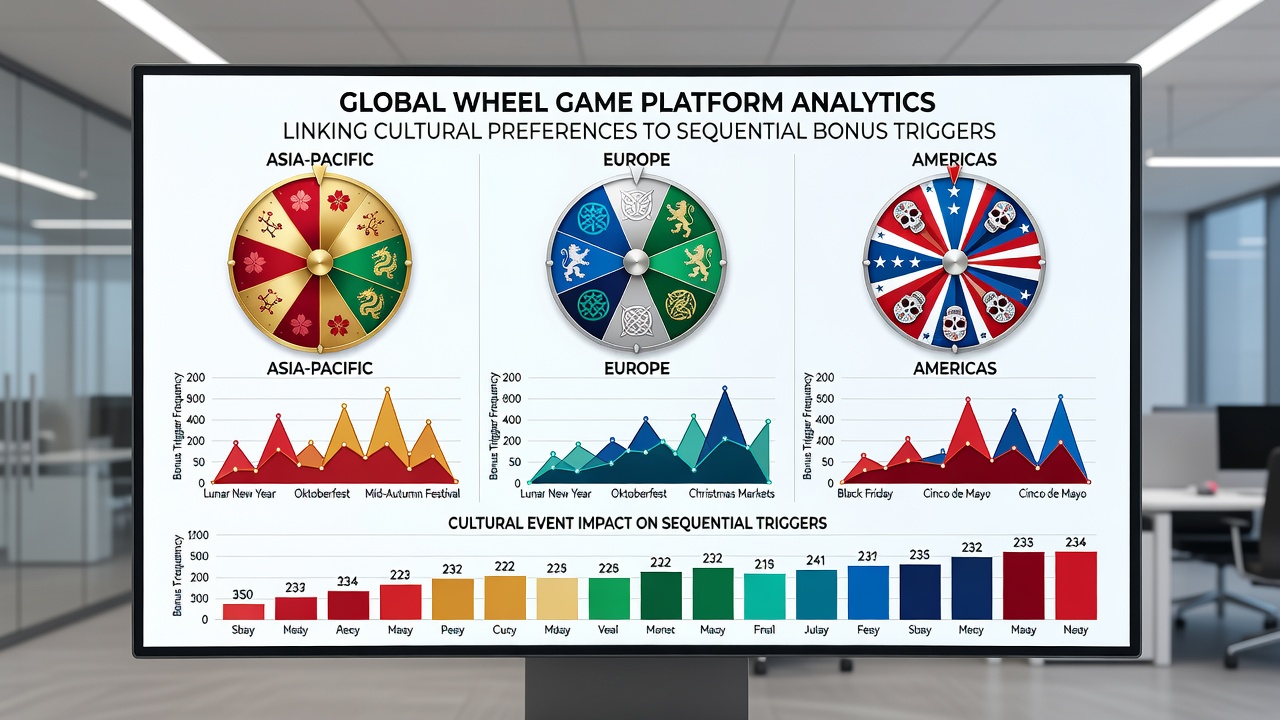
During August 2026 several major wheel game operators introduced region-specific sequencing logic that responds to real-time player location signals. The changes allow the second bonus trigger to appear earlier for users detected in markets with historically faster completion times while extending the interval in regions where players prefer extended exploration phases. These modifications rely on aggregated anonymized data rather than individual profiles, consistent with privacy standards maintained by multiple regulatory bodies.
Operators have also begun testing hybrid sequences that combine spin-based and time-based conditions, drawing from patterns observed across both desktop and mobile traffic. Early figures released by platform analytics teams indicate that such hybrids improve progression rates when matched to the dominant device preference within each geographic segment.
Cross-Platform Comparisons
Global wheel game ecosystems now include dedicated APIs that let operators import sequencing templates developed in one region and adapt them for another. Developers report that templates originating in high-volume Asian markets often require adjustment of the third trigger value when deployed in European jurisdictions to meet differing wagering contribution rules. Conversely, templates built around North American loyalty programs frequently add extra steps when introduced in markets where players respond more strongly to immediate visual feedback.
Research institutions examining these adaptations have published findings showing that successful transfers depend less on the absolute value of each bonus and more on the spacing between triggers. One study conducted through university partnerships in Canada and Singapore highlighted how minor shifts in timing produced larger changes in completion rates than equivalent changes in bonus size.
Conclusion
Sequential bonus triggers on wheel game platforms continue to evolve as operators incorporate regional data into their design processes. The connections between cultural preferences and trigger timing appear in completion statistics gathered across multiple continents, and platforms active in August 2026 have begun implementing more granular adjustments based on those statistics. Continued monitoring by regulatory bodies and industry groups will determine how these structures develop in subsequent periods.