Player Habit Loops and Incentive Decay Patterns in Wheel Game Networks
Zoe Hartmann · Jul 8, 2026
Player Habit Loops and Incentive Decay Patterns in Wheel Game Networks
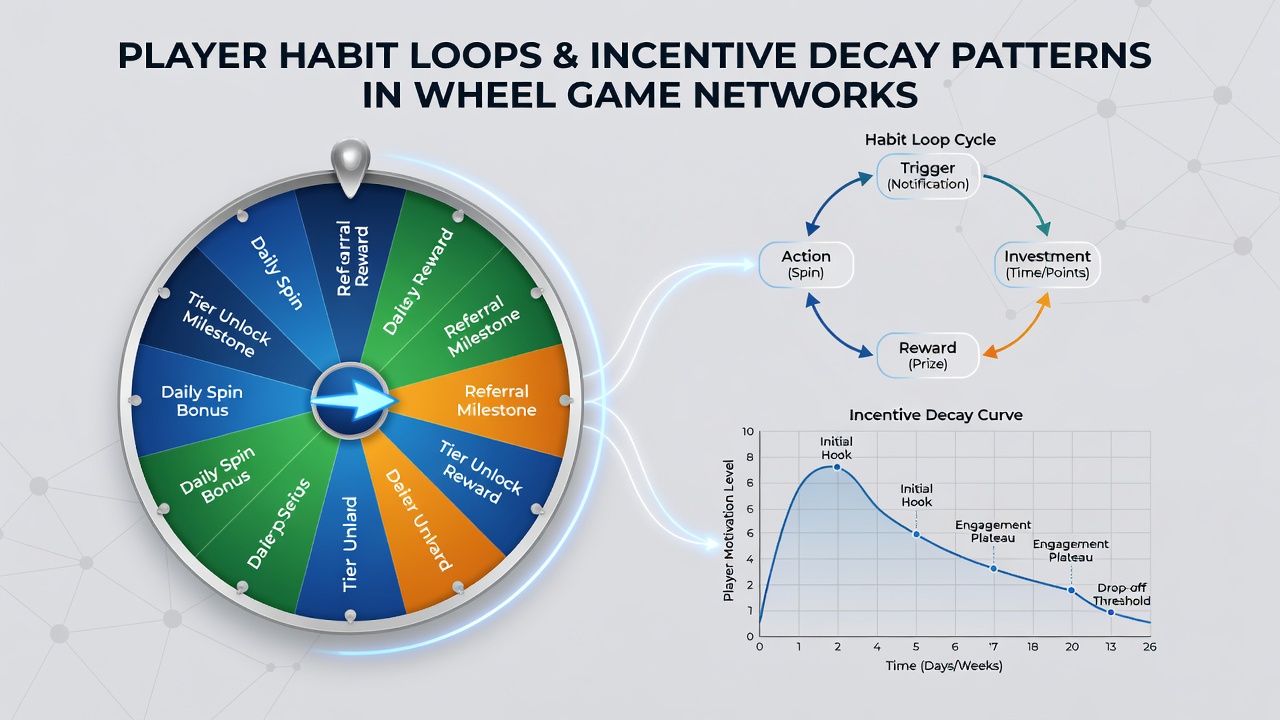
Player habit loops in wheel game networks form through repeated cycles of cues, routines, and rewards that operators embed directly into digital interfaces. Researchers track these loops across roulette and similar spinning formats where visual triggers like spinning animations prompt immediate betting actions. Data from regulated markets shows that players return to the same wheel titles when notification systems align with prior session times, creating predictable engagement rhythms that persist for weeks before any measurable drop occurs.
Habit Formation Mechanisms in Digital Wheel Environments
Habit loops strengthen when operators deliver consistent reward signals immediately after each spin outcome, whether through small balance adjustments or visual confirmation of near-misses. Studies conducted by the Australian Gambling Research Centre indicate that players develop stronger routines in networks offering fixed spin intervals because the predictable timing reduces decision friction and reinforces the cue-routine sequence. Those who engage daily exhibit shorter intervals between sessions compared with weekly participants, and platform logs confirm this compression happens within the first fourteen days of regular play.
Network algorithms adjust cue frequency based on individual login patterns, which accelerates loop consolidation in high-frequency users. Observers note that players who receive personalized spin reminders at consistent hours maintain longer session durations than those receiving generic notifications. The routine component solidifies further when wheel games integrate quick-bet options that minimize the steps between decision and outcome.
Incentive Decay Across Successive Redemption Cycles
Incentive decay emerges as players complete multiple redemptions of the same promotional structure and the motivational impact of each subsequent offer diminishes. Figures from Ontario's iGaming regulator reveal that bonus uptake rates fall by approximately thirty percent between the first and fourth redemption in wheel-focused titles, even when the nominal value remains unchanged. This pattern holds across both free-spin and deposit-match formats, suggesting the decay stems from repeated exposure rather than changes in offer size.
Decay accelerates when reward delivery timing becomes too predictable, because players begin to anticipate the incentive and adjust their expectations accordingly. Platform data collected during July 2026 showed that campaigns repeating identical reward schedules across four consecutive weeks produced steeper engagement drops than those introducing minor timing variations. The effect appears across age groups, although younger cohorts display slightly slower decay rates according to segmented analytics reports.
Regional Data Patterns and Network Adjustments
European operators report similar decay timelines when they standardize incentive structures across multiple wheel titles within a single network. A 2025 cross-border study found that players in multi-jurisdiction environments experience faster incentive fatigue when the same reward loop repeats across borders without regional customization. Networks that introduce small mechanical changes, such as altering the visual presentation of rewards or shifting minimum bet thresholds, record slower decay curves in their longitudinal tracking.
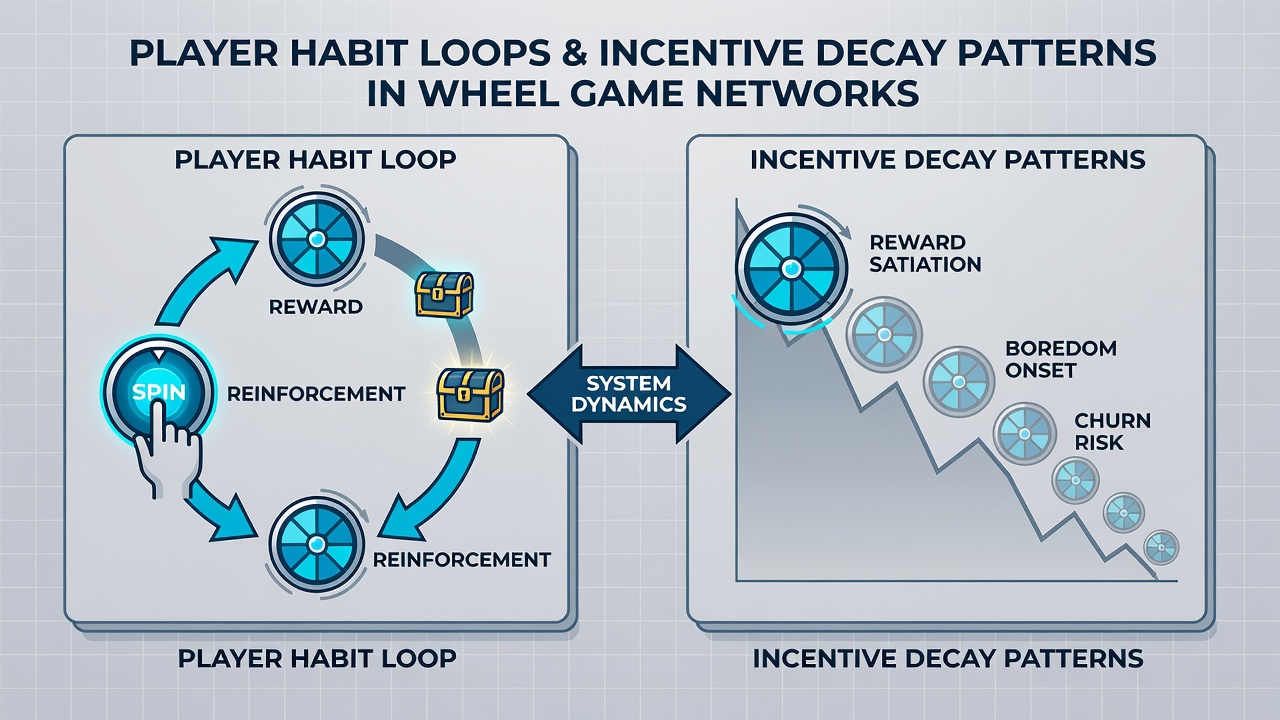
North American markets display comparable trends, yet the rate of decay correlates more strongly with device type than with offer frequency. Mobile users maintain engagement longer when incentives include instant crediting features, while desktop players show earlier signs of disengagement once the novelty of the reward notification fades. These differences emerge clearly in session-length metrics tracked through July 2026.
Interaction Between Habit Strength and Decay Velocity
Stronger habit loops correlate with slower incentive decay because the routine itself becomes self-reinforcing even as external rewards lose salience. Longitudinal tracking in several networks demonstrates that players who establish daily login patterns sustain activity levels for more redemption cycles before measurable drop-off. Conversely, players whose loops remain weak experience rapid decay once the initial promotional period ends.
Network operators respond by inserting variable elements into the routine phase, such as randomized mini-rewards or altered spin mechanics, which interrupt pure repetition and extend the effective lifespan of incentives. Research indicates these interventions produce measurable retention gains only when applied before the fourth redemption cycle, after which decay curves flatten regardless of additional variation.
Conclusion
Player habit loops and incentive decay patterns in wheel game networks operate through measurable cycles that operators monitor via session data and redemption tracking. Regional variations appear in timing and device influence, yet the core sequence of cue formation followed by progressive reward devaluation remains consistent across markets. Networks that adjust reward presentation and timing before decay accelerates maintain higher engagement levels, while standardized loops produce predictable reductions in participation after repeated exposures. Continued monitoring through 2026 and beyond will clarify how these patterns evolve as wheel game interfaces incorporate additional personalization layers.